Latest
97 stories · Editorial coverage

In the quiet hum of a home kitchen, where flour drifts like snow and sugar sparkles under the lights, a silent battle has been waged for generations. It is a conflict between two methods of measurement: the comforting scoop-and-sweep of volume and the clinical precision of weight. For the casual cook, a cup is a cup. But for the baker, that same cup can be the difference between a soaring, buttery croissant and a dense, disappointing brick. The heart of the matter lies not in the ingredients themselves, but in how we choose to quantify them.

The choice of cookware is one of the most fundamental decisions in any kitchen, and the material from which a pot or pan is made profoundly influences not only how it performs but also the very character of the food it helps create. Among the vast array of options, four materials stand out as the pillars of both professional and home kitchens: copper, aluminum, cast iron, and stainless steel. Each possesses a unique personality, a distinct set of physical properties that dictate its thermal reaction, and consequently, its culinary strengths and weaknesses. Understanding these nuances is the key to unlocking their potential and building a kitchen arsenal that can meet any challenge.

In the world of specialty coffee, the choice between ceramic and steel burrs for grinding equipment has become a topic of passionate discussion among baristas and enthusiasts alike. These two materials, while serving the identical purpose of fracturing coffee beans into consistent particles, produce remarkably different results in the cup. The divergence stems not from a single, overwhelming factor, but from a complex interplay of material science, thermal properties, and mechanical precision that ultimately dictates the flavor profile of the brewed coffee.

In the culinary world, time often dictates quality. Traditional curing methods, revered for their depth of flavor and perfect texture, typically demand a significant investment of this precious resource. A seven-day brine or dry cure has long been the gold standard for products like salmon, duck breast, or even certain cuts of pork. The process is slow, allowing salt and seasonings to penetrate the muscle fibers gradually, drawing out moisture and concentrating flavors in a dance that cannot be rushed—or so we thought. A revolutionary technique is challenging this age-old axiom, promising to deliver results indistinguishable from a week-long cure in a mere 24 hours. This method leverages a fundamental principle of physics: vacuum sealing.

When it comes to modern kitchen appliances, the convection oven has revolutionized the way we bake and roast, offering a significant upgrade over traditional radiant ovens. The core principle behind its superior performance lies in its innovative use of airflow technology. Unlike conventional ovens that rely solely on stationary heating elements, convection ovens employ a fan and exhaust system to circulate hot air around the food. This active circulation creates a dynamic cooking environment where heat is transferred more efficiently and consistently to all surfaces of the food, resulting in faster cooking times and remarkably even results.
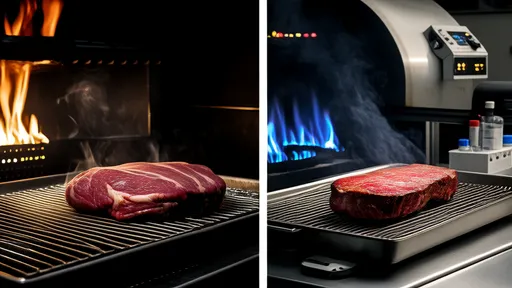
The sizzle of meat hitting a hot surface is a universal language of delicious anticipation, but the source of that heat—the primal crackle of charcoal or the clean, consistent hiss of gas—is a subject of passionate debate among grill masters and backyard chefs alike. This isn't merely a matter of convenience or cost; it's a fundamental culinary question that strikes at the very heart of flavor. The choice between charcoal and gas grilling represents a crossroads between tradition and modernity, between artisanal craft and technological precision. To understand this debate is to delve into the complex chemistry of heat, smoke, and Maillard reaction, exploring how different energy sources uniquely sculpt the sensory profile of grilled food.
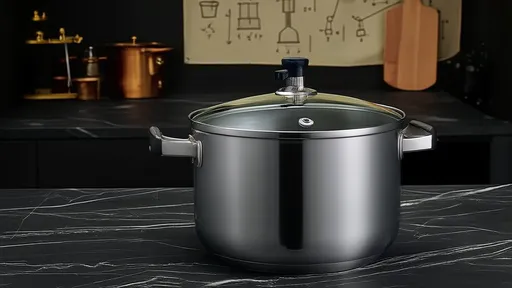
In the realm of culinary physics, few tools are as fascinating and transformative as the pressure cooker. Its ability to tenderize even the toughest cuts of meat in a fraction of the time required by conventional methods is nothing short of alchemy. This remarkable feat is not magic, but a brilliant application of fundamental physics and biochemistry, primarily targeting the breakdown of stubborn connective tissues. Understanding this process requires a journey into the molecular structure of meat and the powerful influence of high-pressure environments.

There is a certain magic to the sizzle and aroma that erupts from a seasoned wok in a bustling Chinese restaurant kitchen. That intoxicating, almost smoky fragrance that clings to stir-fried greens, beef, or noodles is what chefs and food lovers call "wok hei," often translated as "the breath of the wok." It is the holy grail of Cantonese cuisine, a complex flavor signature that has long been considered the exclusive domain of professional kitchens wielding roaring, jet-engine-like gas burners. For the home cook armed with an electric or induction hob, replicating this phenomenon has often felt like a futile quest. The fundamental challenge has always been heat, or more precisely, the rapid and intense application of it that domestic appliances seemingly cannot muster.
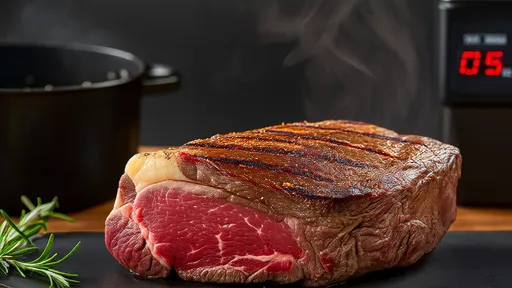
In the world of culinary arts, few techniques have generated as much buzz and transformative potential as sous vide cooking. At its heart, sous vide—French for "under vacuum"—involves sealing food in airtight bags and immersing it in a precisely temperature-controlled water bath. While the method itself isn't new, having been used in professional kitchens for decades, it is the recent accessibility of precise and affordable immersion circulators for home cooks that has truly democratized this technology. The core promise of sous vide, and arguably its most revolutionary aspect, is its unparalleled precision, often boasting tolerances within ±0.5°C. This microscopic margin of error is not just a technical specification; it is the key that has unlocked a new paradigm for cooking the steak, fundamentally challenging and redefining our very understanding of doneness.

The global scientific community is currently riding what many call the "biobank wave" – an unprecedented movement to collect, sequence, and analyze millions of human genomes. At the heart of this movement lies the ambitious Million Genome Project, a collaborative effort involving governments, research institutions, and private companies across continents. While these initiatives promise revolutionary breakthroughs in personalized medicine and disease prevention, they simultaneously raise profound questions about data privacy in the genomic age.
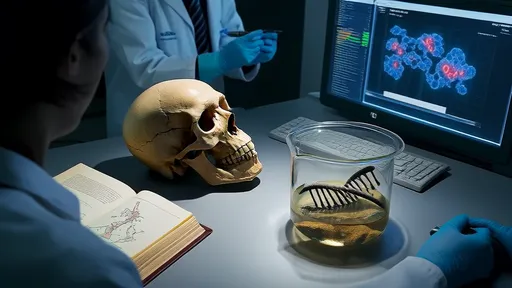
The study of ancient DNA has undergone nothing short of a revolution in the past two decades. What began as tentative attempts to extract genetic material from long-dead organisms has blossomed into a field that is fundamentally rewriting our understanding of human history, evolution, and even modern medicine. From revealing our intimate connections with Neanderthals to tracing the origins of devastating diseases, ancient genomics has become one of the most transformative scientific disciplines of our time.

The human brain remains the final frontier of personal privacy in our increasingly digitized world. As neurotechnology advances at a breathtaking pace, capable of reading and even altering our neural activity, a new civil rights movement has emerged to protect what many are calling "the last truly private space" - our thoughts.

The concept of urban farming has evolved dramatically in recent years, with innovative systems like the Balcony Farm Symbiosis System—integrating fish, plants, and microbes—emerging as a sustainable solution for city dwellers. This three-loop ecological design not only maximizes limited space but also creates a self-sustaining micro-ecosystem that mimics natural cycles. As more people seek ways to reduce their environmental footprint, this system offers a practical yet revolutionary approach to growing food at home.

The fitness industry stands on the brink of a technological revolution as sweat biosensors emerge as game-changing tools for athletes and health enthusiasts alike. These tiny, wearable devices analyze biomarkers in perspiration to provide real-time feedback about workout intensity, hydration levels, and metabolic efficiency. Unlike traditional fitness trackers that measure heart rate or steps, sweat biosensors offer a direct window into the body's biochemical processes during exercise.

The growing popularity of pet genetic testing has led many owners to explore the potential benefits of uncovering their furry companions' breed composition and inherited disease risks. Companies offering these services claim to provide valuable insights into a pet's health predispositions, but how reliable are these predictions when it comes to breed-specific disease warnings?

The murky waters of urban rivers have long posed environmental challenges, but an innovative solution is taking root—literally. Across the globe, a quiet revolution in waterway restoration is unfolding through the use of biological filtration blankets, where carefully selected plant species create living filtration systems along degraded riverbanks. This approach harnesses the natural filtering capabilities of plant roots to intercept pollutants while simultaneously stabilizing eroded shorelines.

The world of fermented foods holds a treasure trove of microbial wonders, and kombucha stands as one of its most fascinating creations. This effervescent, tangy elixir owes its existence to a dynamic ecosystem of bacteria and yeast working in harmony. For home brewers, understanding and maintaining this delicate microbial balance isn’t just a scientific curiosity—it’s the key to crafting consistently delicious and healthful kombucha.

The dream of merging human cognition with machines has long been a staple of science fiction, but recent advancements suggest that the line between fantasy and reality is blurring faster than anticipated. From brain-computer interfaces (BCIs) that allow paralyzed individuals to control robotic limbs with their thoughts to experimental DNA-based computing systems that promise unprecedented data storage capabilities, the future is arriving in fragments. Yet, despite the hype, significant hurdles remain before these technologies become ubiquitous. The journey from laboratory prototypes to mainstream adoption is fraught with technical, ethical, and societal challenges that demand careful navigation.

In the grand narrative of scientific discovery, certain names echo through history with reverence—Darwin, Einstein, Pasteur. Yet scratch beneath the surface of these well-chronicled breakthroughs, and you’ll find a quieter, more unsettling truth: the women who shaped biology’s foundations often worked in the shadows, their contributions erased by time, institutional bias, or outright appropriation. This isn’t merely about overlooked assistants; these were pioneering minds who decoded life’s mechanisms while navigating a world that refused to see them as equals.

The annals of scientific progress are punctuated by moments of triumph and tragedy, but few events have reshaped the landscape of biosafety as profoundly as the laboratory disasters that serve as stark reminders of humanity's precarious relationship with biological hazards. These incidents, often buried in classified reports or obscured by bureaucratic language, reveal uncomfortable truths about institutional failures, human error, and the unpredictable nature of pathogens when containment protocols break down.

The Nobel Prize in Physiology or Medicine has consistently recognized paradigm-shifting discoveries that redefine our understanding of life sciences. As we navigate the third decade of the 21st century, several groundbreaking biological breakthroughs are emerging as strong contenders for future Nobel recognition. These discoveries span from revolutionary gene-editing applications to unprecedented insights into cellular communication and the microbiome's role in human health.
The enigmas of biology have long captivated scientists and laypeople alike, presenting puzzles that defy easy explanation. From the origins of consciousness to the sudden explosion of life during the Cambrian period, these mysteries challenge our understanding of life itself. Unlike the tidy narratives often presented in textbooks, the reality is far more complex, with each question opening doors to even deeper uncertainties.

For decades, the antimalarial drug artemisinin has been a lifeline for millions in tropical regions. Derived from the sweet wormwood plant (Artemisia annua), this sesquiterpene lactone compound has faced persistent challenges in traditional agricultural production – from seasonal variability to geopolitical supply chain vulnerabilities. Now, synthetic biology is rewriting the playbook through microbial biosynthesis, and the latest advancements suggest we're on the verge of an industrial transformation.

The natural world has long been a source of inspiration for technological advancements, and few creatures have captured the imagination of engineers and biologists alike quite like the dragonfly. With its unparalleled agility, speed, and precision in flight, the dragonfly serves as a living blueprint for the next generation of flying machines—bio-inspired flapping-wing aircraft. Recent breakthroughs in neuroscience and biomechanics have begun to unravel the secrets behind the dragonfly's flight, offering tantalizing clues for the development of autonomous micro-aerial vehicles.