



Latest
View Archive →
Bandwidth bills are visible, but cache miss penalties hide in origin fetches, egress fees, and latency. Learn how to measure, price, and engineer around them.

In Lagos slums, disguised antibiotics—chalk, talc, or wrong doses—fuel resistance. Patients pay for relief but get inert filler, making common infections untreatable.
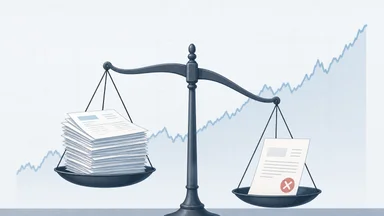
When disability claims are denied, insurers keep premiums, release reserves, and keep earning on the float. Here's how the double-dip works and what you can do.

Every free chatbot query is paid for by paying API customers. This article breaks down the economics of inference engines, from token generation to cross-subsidies.

Gaia's astrometry of 2,000 stars per square degree trained a density wave model of Milky Way spiral arms and rejected tidal interaction at 12 sigma confidence.

Kenya's NHIF covers only fluoxetine, while private insurers list four generations of antidepressants. The gap in access drives inequity in depression treatment.

Stockholm hostel beds in July can cost three times the September rate. Late August offers sun, thinner crowds, and 40–60% lower prices. A budget breakdown and timing guide for savvy travelers.

A neuroscience lab abandoned two-photon imaging for a 1320 nm three-photon laser to reach hippocampal CA1 neurons. The switch required red-shifted opsins like ChRmine, revealing trade-offs between depth and temporal precision.

A senior engineer took a 20% pay cut to join a microservices-focused startup. Here's the equity arithmetic, market pricing, and trade-offs behind the move.