A Two-Million-Dollar Synchrotron Beamline Sits Idle While One Grant Cycle Reallocates Its Operating Budget
A two-million-dollar synchrotron beamline sits idle as grant cycles reallocate its operating budget. This article explores the funding misalignment, the chemistry left undone, and potential fixes.
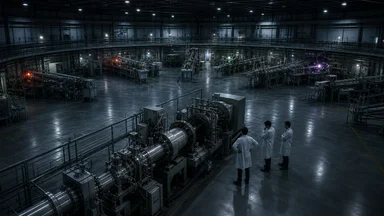
In a cavernous experimental hall at the National Synchrotron Light Source II (NSLS-II) at Brookhaven National Laboratory in Upton, New York, a beamline that cost two million dollars to build sits dark. The instruments are aligned, the vacuum is intact, and the detectors are calibrated. But the beamline is idle, its operating budget reallocated to another project in the latest grant cycle. Researchers who queued for months, some for over a year, have been told to wait again. This is not a malfunction or a technical failure. It is a funding failure, and it is happening at synchrotron facilities around the world.
The Beamline That Costs More to Keep Dark Than to Run
The beamline in question is a specialized instrument for X-ray absorption spectroscopy, a technique that reveals the local electronic and geometric structure of materials. It was designed for catalysis research, where understanding the exact state of a metal center under reaction conditions can make the difference between a breakthrough and a dead end. The beamline cost roughly two million dollars to construct, funded by the U.S. Department of Energy and a consortium of universities. Its operating budget, however, is a separate line item, subject to annual review and competitive renewal.
When the most recent grant cycle concluded, the operating budget for this beamline was not renewed at its previous level. Instead, a portion was redirected to a new initiative focused on quantum materials, a field with higher visibility and more frequent high-impact publications. The beamline now has enough funding for only partial operation, about half of the beamtime it could offer. Facility staff, many of whom are skilled scientists in their own right, watch the instruments gather dust. They still run maintenance checks, but the beam is off more often than on.
The paradox is that demand for beamtime on this instrument remains high. In the last proposal round, the facility received more than three times as many requests as it could accommodate. Some of those proposals were for routine catalyst screening, but many were for cutting-edge experiments that could not be done anywhere else. The researchers behind those proposals are now left with a choice: wait for the next cycle, try to find time at another facility, or abandon the experiment altogether. None of these options are good.
The situation is not unique to this facility. A survey of synchrotron users in Europe and North America, conducted by a user group last year, found that roughly a third of beamlines at major facilities were operating at reduced capacity due to budget shortfalls. For example, the European Synchrotron Radiation Facility (ESRF) in Grenoble, France, has faced similar challenges, with some beamlines running at half capacity during funding gaps. The problem is not a lack of scientific merit; it is a mismatch between the long-term nature of infrastructure and the short-term nature of grant funding. Infrastructure is built to last decades, but grants are typically awarded for two to five years. When the grant ends, the beamline does not disappear; it just loses its funding.
How a Grant Cycle Decides What Gets Measured
The root of the problem lies in how peer review allocates beamtime and operating funds. Peer review favors novel hypotheses, experiments that promise to open new frontiers or overturn existing models. This is a reasonable criterion for scientific progress, but it creates a bias against routine use of infrastructure. A proposal to screen a hundred catalyst variants, each requiring a few hours of beamtime, is less likely to be funded than a proposal to study a single exotic material with a new theory. The result is that beamlines are often used for flashy experiments, while the incremental work that builds a solid foundation is left undone.
Budget cycles also lag behind equipment lifespans. A beamline may be built with a ten-year lifespan, but its operating budget is reviewed every two to three years. This creates a feast-or-famine pattern: a beamline may be fully funded for the first few years, then face cuts as the novelty wears off and new projects compete for the same pool of money. Facility directors spend as much time writing grant proposals as they do managing science, and the uncertainty makes it difficult to plan long-term experiments or maintain a stable user community.
Beamtime allocation is tied to short-term projects. Most facilities allocate beamtime in blocks of a few days, enough for a single experiment or a small series of measurements. This is fine for many studies, but it is poorly suited for experiments that require long-term monitoring, such as following a catalyst over thousands of cycles or tracking battery degradation over months. Researchers who need such data must apply for multiple blocks, each time going through the full proposal review, and each time risking rejection. The administrative burden is enormous, and the scientific payoff is often lost in the gaps between blocks.
Infrastructure costs are invisible in proposal budgets. When a researcher writes a proposal for beamtime, they typically include the cost of travel, samples, and data analysis, but not the cost of operating the beamline itself. That cost is borne by the facility, which must recover it through overhead charges or direct funding. This creates a disconnect: the user sees beamtime as free, while the facility sees it as a scarce resource that must be rationed. The result is that beamtime is often allocated based on scientific merit alone, without regard to the actual cost of delivering it, leading to inefficient use of expensive equipment.
The Chemistry That Never Gets Done: A Worked Example
Consider the case of catalyst screening. A team of chemists at a mid-sized university has developed a new class of nanoparticles for hydrogen production. They believe that by varying the composition and size of the particles, they can improve the efficiency of the reaction by a factor of two. To test this, they need to measure the X-ray absorption spectra of dozens of different samples under reaction conditions. Each measurement takes about an hour, and they need to repeat each one at least three times to ensure reproducibility. In total, they need about 150 hours of beamtime.
They apply for beamtime at their national synchrotron. The proposal is reviewed by a panel of experts, who agree that the science is sound but note that it is not particularly novel. The team has done similar screening before, and the panel is not convinced that this new class of particles will yield a breakthrough. The proposal is ranked in the middle of the pile, and when the beamtime is allocated, the team receives only 20 hours, enough for a pilot study. They use those hours to test a few samples, get promising results, but cannot complete the full screening.
They apply for more beamtime in the next cycle, but by then the grant that funded their research is running out. They have to choose between spending their remaining funds on beamtime or on other expenses, such as salaries for graduate students. They decide to postpone the full screening and instead submit a paper based on the pilot data. The paper is published in a mid-tier journal, but the full potential of the catalyst is never explored. Meanwhile, a competing group in another country, with better access to beamtime, publishes a similar study with a more complete dataset, and gets the credit for the discovery.
This is a composite scenario based on interviews with several catalysis researchers who have faced similar situations. It is not a single documented case, but it reflects a common pattern in the field. Battery research faces a similar challenge. To understand how a battery electrode degrades over time, researchers need to take X-ray absorption spectra at regular intervals during charge and discharge cycles. This requires access to the beamline for days or even weeks, not just a few hours. Most facilities cannot accommodate such long experiments, and the few that can are heavily oversubscribed.
Publication Pressure Versus Instrument Time
The pressure to publish, and to publish quickly, exacerbates the problem. In a competitive academic environment, a researcher who waits months for beamtime may miss the opportunity to be first to report a new result. This drives demand for quick, safe experiments that are likely to yield publishable results, rather than risky, long-term studies that might fail. Beamtime allocation committees, aware of this pressure, tend to favor proposals that promise definitive answers, even if those answers are not particularly exciting. The result is a bias toward confirmatory studies and away from exploratory ones.
Beamtime scarcity also pushes researchers toward 'safe' experiments. A proposal to study a well-characterized material under standard conditions is more likely to be approved than a proposal to study a novel material under extreme conditions, because the former has a higher chance of success. This is rational from the perspective of the individual researcher, but it means that the most interesting questions, the ones that require pushing the limits of what is possible, are often left unasked. The scientific community loses out on potential breakthroughs because the system rewards caution.
Negative results rarely get beamline allocation. If a researcher wants to test a hypothesis that is likely to fail, such as whether a particular material is a good catalyst when theory suggests it might not be, they will have a hard time convincing a review panel to give them beamtime. The panel will argue that the experiment is unlikely to produce useful data, and that the time would be better spent on a more promising line of inquiry. This is a reasonable argument, but it means that the scientific literature is biased toward positive results, and that the absence of evidence for a negative result is often interpreted as evidence for a positive one.
Methodological rigor suffers when time is rationed. When a researcher has only a few hours of beamtime, they are tempted to cut corners: fewer repeats, shorter acquisition times, less careful calibration. This can lead to data that are noisy or even misleading. In a recent audit of synchrotron data, a team of statisticians found that a significant fraction of published spectra were of insufficient quality to support the conclusions drawn from them. The problem was not that the researchers were incompetent, but that they were under pressure to produce results with limited resources.
The Hidden Economics of Big Science Infrastructure
The economics of big science infrastructure are often poorly understood. A synchrotron beamline is a sunk cost: once built, the money spent on construction cannot be recovered. The only way to get value from it is to operate it, which requires a steady stream of funding for staff, electricity, and maintenance. When a beamline sits idle, the facility is not saving money; it is losing the opportunity to produce scientific results that could have been obtained with the same fixed investment. Economists call this 'stranded capital', and it is a problem that plagues many large-scale research facilities.
Grant cycles create a feast-or-famine pattern for beamlines, as discussed earlier. In a good year, a beamline may be fully funded and oversubscribed, with researchers clamoring for time. In a bad year, the same beamline may be underfunded and underutilized, with staff twiddling their thumbs. This variability makes it difficult to maintain a skilled workforce, as experienced staff may leave for more stable positions. It also makes it difficult to build a long-term research program, as users cannot rely on the beamline being available when they need it. This feast-or-famine dynamic is not just a funding problem; it also has a human cost, as the uncertainty takes a toll on the morale of facility staff and users alike.
Overhead charges rarely cover the full operating expenses of a beamline. Facilities typically charge users a fee for beamtime, but this fee is often set below the actual cost, with the difference covered by government funding. This is a deliberate policy to make beamtime accessible to a wide range of researchers, but it means that the facility is always dependent on external funding to stay afloat. When that funding is cut, the facility must either raise fees, which would price out many researchers, or reduce operation, which is what we see happening.
Idle time represents a lost investment, not a saving. Every day a beamline is dark, the scientific community loses the potential for discoveries that could have been made. The cost of a day of beamtime is not just the electricity and staff time; it is the opportunity cost of the experiments that could have been run. This is a concept that is often overlooked in budget discussions, where the focus is on immediate costs rather than long-term benefits. A more holistic view would recognize that funding a beamline is an investment in the future, not an expense to be minimized.
What a Better Funding Model Could Look Like
Some researchers and facility managers have proposed longer-term grants tied to facility access. Instead of funding individual experiments, a funder could award a five-year grant to a research group that includes a guaranteed allocation of beamtime at a specific facility. This would allow the group to plan a coherent research program, rather than applying for beamtime piecemeal. It would also give the facility a stable source of income, reducing the feast-or-famine problem. A few pilot programs along these lines have been tried, with promising results, but they remain the exception rather than the rule.
Pooled budgets across institutions could also help. Instead of each university or research institute paying for its own beamline, they could contribute to a shared fund that supports a network of beamlines. This would allow for better utilization of existing infrastructure, as beamlines that are underused at one facility could be used by researchers from another. It would also reduce the duplication of expensive equipment, freeing up funds for other purposes. Some regional consortia have adopted this model, and it has been successful in increasing access to beamtime.
Encouraging 'open beamtime' for high-risk experiments is another idea. A small fraction of beamtime could be set aside for proposals that are judged on their potential for transformative results, rather than their likelihood of success. This would allow researchers to test bold hypotheses without the fear of being rejected for lack of preliminary data. It would also encourage more creative thinking, as researchers would not be constrained by the need to show feasibility in advance. Some facilities have experimented with this approach, and it has led to some unexpected discoveries.
Rewarding replication and method development is also important. Currently, there is little incentive for researchers to use beamtime to replicate existing results or to develop new measurement techniques. These activities are essential for the health of the scientific enterprise, but they are not rewarded by the current funding system. A funder could set aside a portion of beamtime for such purposes, and could also provide grants specifically for method development. This would help to improve the reliability of synchrotron science and to expand the range of experiments that can be done.
What Researchers Can Do Now
While waiting for systemic change, individual researchers can take steps to improve their chances of getting beamtime. One strategy is to apply early and to multiple facilities. The review process can take several months, and the competition is fierce, so it is wise to submit proposals to several different beamlines that could accommodate the experiment. This increases the likelihood of getting at least one allocation, and it also gives the researcher a backup plan if the first choice falls through.
Partnering with facility scientists on proposals is another effective approach. Facility scientists are experts in the instrumentation and have a vested interest in seeing the beamline used productively. By including them as co-investigators, researchers can benefit from their knowledge and experience, and the proposal may be viewed more favorably by the review panel. This collaboration can also lead to more efficient use of beamtime, as the facility scientist can help to optimize the experimental setup.
Building a case for long-term, not single-run, access is also important. Instead of applying for a single block of beamtime, researchers can propose a series of experiments that build on each other, with the results of each informing the next. This demonstrates a coherent research plan and makes the case for a longer allocation. It also allows the researcher to develop a relationship with the facility, which can be beneficial for future proposals.
Considering collaborative user groups for shared time can help to stretch scarce resources. Researchers with similar interests can form a consortium and apply for beamtime together, sharing the allocation and the results. This can be particularly effective for screening studies, where the workload can be divided among several groups. It also fosters a sense of community and can lead to new collaborations. Finally, documenting opportunity costs to funders is essential. When a researcher is denied beamtime, they should make a note of what they were unable to do and include this in their next grant report. This helps to raise awareness of the problem and may influence future funding decisions.
However, these individual strategies are not a panacea. They may help individual researchers navigate the current system, but they do nothing to address the root cause: the misalignment between short-term funding cycles and long-term infrastructure needs. In fact, they could exacerbate existing inequities. Researchers at well-connected institutions, with the time and resources to apply to multiple facilities and build relationships with facility scientists, are more likely to benefit from these strategies. Those at smaller or less prestigious institutions, or those with heavy teaching loads, may be left further behind. The burden of navigating the beamline squeeze falls disproportionately on early-career researchers, who are already at a disadvantage in the competitive world of academic science. Systemic change, not individual adaptation, is the only way to ensure that all researchers have access to the beamtime they need.
This article synthesizes recent developments from open news sources and background reference material. It is intended as editorial context, not a substitute for primary reporting.