One Inference Engine's Output Token Tax Funds Every User's Free Tier Session
Every free chatbot query is paid for by paying API customers. This article breaks down the economics of inference engines, from token generation to cross-subsidies.
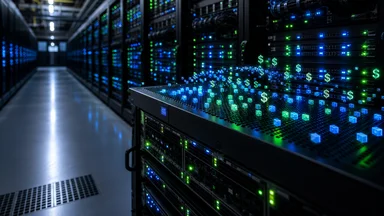
Every time you type a question into a free chatbot, somewhere a cluster of GPUs lights up, burns through a fraction of a watt, and generates a string of tokens that lands in your browser. You pay nothing. The provider pays something—usually a few tenths of a cent per query. Over millions of daily free users, that something adds up to millions of dollars a month. The money has to come from somewhere, and it comes from a cross-subsidy that is as old as freemium business models: the paying customers who buy API access or premium subscriptions effectively fund the free tier. This subsidy flows from the inference engine that generates output tokens to the balance sheet that makes the free tier possible.
The Free Tier Is Not Free—Someone Pays Per Token
Every chatbot query consumes GPU cycles. For a typical large language model, generating a 500-token response costs the provider somewhere between $0.002 and $0.01 in compute, depending on the model size, hardware, and utilization. That may sound trivial, but multiply it by tens of millions of daily queries, and the numbers become staggering. OpenAI, for instance, was estimated to spend roughly $700,000 per day on inference costs for ChatGPT in early 2023—a figure that has likely grown as usage has surged. Meta, Google, and Microsoft all offer free LLM access, and each bears a similar cost.
The free tier is a deliberate loss leader. It drives adoption, collects user feedback, and in some cases, gathers data that can improve the model. But the operating costs are real, and they have to be covered by revenue from elsewhere. For most providers, that means the paying API customers—developers and enterprises that purchase tokens at a markup—are the ones who foot the bill. According to a 2023 analysis by SemiAnalysis, the cost of serving a ChatGPT query was estimated at roughly $0.004 per query, while OpenAI charged API customers up to $0.03 per 1,000 tokens for GPT-4, implying a markup of 5–10x. This cross-subsidy is structurally identical to the way freemium games are funded by a small number of high-spending whales. A tiny fraction of users generate the majority of revenue, and that revenue pays for the infrastructure that serves everyone.
The economics become even more pronounced when you consider the hardware. A single Nvidia H100 GPU can cost upwards of $30,000, and running it 24/7 draws roughly 700 watts. Data center power, cooling, and networking add another layer of expense. Providers amortize these costs over millions of requests, but the marginal cost of each free query is still non-zero. The difference is that the provider can absorb it because the average revenue per paying user is high enough to cover the average cost per free user.
This model works as long as the ratio of free to paid users stays within a certain range. If too many users stay on the free tier and too few upgrade, the subsidy collapses. That is why providers impose usage caps—so many queries per day, so many tokens per response—and why they constantly A/B test the threshold that nudges users toward a paid plan. The free tier is not a charity; it is a funnel.
How One Inference Engine Generates the Subsidy
The inference engine is the software stack that runs the model on the hardware. It is responsible for batching requests, managing memory, and generating tokens as quickly as possible. The better the engine, the lower the cost per query—and the larger the subsidy that can be offered to free users. Two techniques dominate modern inference: batching and speculative decoding.
Batching groups multiple user requests together and processes them as a single matrix operation on the GPU. This amortizes the fixed overhead of loading the model weights and setting up the computation. A single batch of 64 queries costs only slightly more than a batch of 1, because the GPU's parallelism is largely underutilized with small batches. The challenge is that users arrive at different times, so the engine must wait a few milliseconds to accumulate a batch before processing. This introduces latency, which is why providers set a maximum batch wait time—typically 10–30 milliseconds—to balance throughput and responsiveness.
Speculative decoding is a newer technique that uses a small, fast draft model to predict the next several tokens, then verifies them with the large model in parallel. If the draft model is accurate, the large model can generate multiple tokens at once, effectively increasing throughput by a factor of 2–3x. This reduces the cost per output token significantly. Google's Medusa and Meta's speculative decoding implementations are open-source, and many providers have adopted them. The trade-off is that the draft model adds its own compute cost, and if it guesses poorly, the large model must reject its predictions and start over, wasting cycles.
The same inference engine that serves free users also handles paid API traffic, often on the same hardware. Providers prioritize paid requests with lower latency guarantees, while free requests are queued and batched more aggressively. This means that during peak hours, free users may experience slower responses as the engine fills batches to capacity. The engine's scheduler is a critical piece of infrastructure—it decides which requests get GPU time and which wait. The goal is to maximize hardware utilization without degrading the paid tier's service-level agreements.
At scale, the marginal cost of an additional free query approaches zero, because the hardware is already running and the engine is already loaded. But peak load still strains capacity. During a viral moment—like a new model release or a Super Bowl ad—the engine must scale up quickly, often by spinning up additional instances in the cloud. That burst capacity is expensive, and it is typically paid for by the reserve margins built into the paid tier's pricing.
The Hidden Economics of Output Tokens
Not all tokens are created equal. The cost to generate an output token varies significantly by model size, architecture, and hardware. A small 7-billion-parameter model costs roughly one-tenth as much per token as a 70-billion-parameter model. Providers often use smaller models for the free tier and reserve the large ones for paid users, or they offer a mix: free users get a fast, small model for simple queries, while complex questions are routed to a larger model with a higher cost.
The KV cache is one of the largest hidden expenses in inference. When generating a response, the model must store the key-value pairs of all previous tokens in memory to compute attention. For a 70B model with a 4096-token context window, the KV cache can consume upwards of 2 GB of high-bandwidth memory per request. On an H100 with 80 GB of memory, that limits concurrent users to about 40 before memory runs out. Providers optimize by using paged attention, which swaps cache entries to CPU memory, but that adds latency. Some are experimenting with KV cache compression, but it remains an active research area.
Hardware amortization is another factor that is easy to overlook. A GPU cluster is typically depreciated over 3–5 years, meaning the provider must recover the capital cost over that period. If a GPU costs $30,000 and runs 24/7 for 4 years, the amortized cost is roughly $0.86 per hour. At a conservative utilization of 50%, that translates to about $0.0017 per query for a 500-token response. This is before electricity, cooling, networking, and staffing. The actual cost is higher, but the amortization alone sets a floor.
Energy cost is rising as a share of total inference expense. Data centers already consume about 1–2% of global electricity, and that share is growing. For a provider running tens of thousands of GPUs, the electricity bill can run into the tens of millions per year. Some providers are locating data centers in regions with cheap renewable energy or negotiating long-term power purchase agreements to lock in rates. The energy cost per token is small—roughly $0.0001–0.0005 per 500-token response—but it scales linearly with usage, and it is one of the few variable costs that cannot be optimized away by better software.
How Big Tech Keeps the Free Tier Alive
Meta, Google, and Microsoft all offer free access to large language models—Meta's Llama models via its AI studio, Google's Gemini, and Microsoft's Copilot. Each of these companies has a diversified revenue stream that can absorb the cost of the free tier. Meta makes money from advertising, Google from search ads and cloud, Microsoft from Office 365, Azure, and LinkedIn. The free LLM tier is a tool to drive engagement and ecosystem lock-in, not a standalone business.
For Google, Gemini's free tier is a way to keep users within the Google ecosystem rather than defecting to a competitor. The more users interact with Gemini, the more data Google collects on user intent and behavior, which can improve its ad targeting and search algorithms. There are privacy concerns—users may not realize that their free queries are being used for model training or product improvement. Google's privacy policy states that it may use interactions to improve its services, but the specifics are vague. This is a trade-off that many users accept for free access.
Microsoft's Copilot is integrated into Windows, Edge, and Office, and its free tier is a way to familiarize users with AI features that they might later pay for as part of a Microsoft 365 subscription. The company has invested heavily in OpenAI and runs its models on Azure infrastructure, which gives it favorable pricing. Microsoft can also use the free tier to gather telemetry on which features users find most valuable, informing product roadmap decisions.
Meta takes a different approach: it releases open-source models like Llama and provides a free inference API through its AI studio. The cost of running that API is offset by the value of the open-source ecosystem—developers build tools and applications on top of Llama, which in turn drives demand for Meta's cloud services and hardware. Meta also uses the free tier to collect data that helps it improve its models, though it has been more cautious about privacy than some peers.
Custom hardware is a key enabler for all three. Google's TPU, Microsoft's Maia, and Meta's custom ASICs are designed specifically for neural network inference and training, offering better performance per watt than general-purpose GPUs. This gives them a cost advantage that makes the free tier more sustainable. A TPU v5e, for instance, can deliver roughly 2x the throughput of an H100 for certain models, at a lower per-chip cost. The savings are passed on to the free tier.
The Startup Squeeze: When Subsidies Run Out
Startups that offer free LLM access face a more precarious economics. Without a diversified revenue stream—no ad business, no cloud platform, no enterprise software suite—they must rely on venture capital to cover the gap between the cost of inference and the revenue from paying customers. This is a classic burn-rate play: acquire users, grow fast, and hope to convert enough of them to paid before the money runs out.
The math is unforgiving. A startup with 1 million free users, each making 10 queries per day at a cost of $0.002 per query, is burning $20,000 per day—$600,000 per month—on inference alone. If only 2% of those users convert to a $20/month paid plan, the revenue is $400,000 per month, leaving a $200,000 deficit. That deficit must be covered by venture funding, and it grows as the user base grows. The path to profitability requires either a much higher conversion rate, a much lower cost per query, or a combination of both.
Some startups limit the free tier to small models. A 7B model costs roughly a third of a 70B model per token, so the subsidy is smaller. Others impose strict usage caps—free users get 10 queries per day, or 1000 tokens per response. A few have experimented with a token bank model, where users earn tokens by engaging with the product or referring friends, effectively paying with their attention or network. This reduces the cash cost but introduces complexity and can feel gimmicky.
The most successful startups in this space have found ways to reduce inference cost through custom infrastructure. For example, some use speculative decoding or build their own inference engines that are more efficient than the standard vLLM or TensorRT-LLM. Others use spot instances or preemptible GPUs to get compute at a discount. But these optimizations only go so far. The fundamental tension remains: every free token costs real money, and that money has to come from somewhere.
Venture capital is not infinite. As the AI hype cycle matures, investors are demanding clearer paths to profitability. Startups that cannot demonstrate a sustainable unit economy may find their free tier cut back or eliminated entirely. We have already seen some AI chatbots switch to a paid-only model or introduce a freemium tier with very limited free usage. The startup squeeze is real, and it is likely to intensify as the cost of inference remains high and the pool of paying users grows more slowly than the pool of free users.
Practical Takeaway: What Your Free Session Actually Costs
To put a number on it: a 500-token response from a 70B model costs the provider roughly $0.002–$0.005 in GPU time, energy, and memory. A 1000-token response might be $0.004–$0.01. If you use a free chatbot for 10 sessions per day, each averaging 500 tokens, the provider pays about $0.02–$0.05 per day for you. Over a month, that is $0.60–$1.50. Multiply by millions of users, and the monthly bill for a free tier can be $3–15 per active user, depending on usage patterns.
Compare that to a paid subscription like ChatGPT Plus at $20 per month, which includes a higher usage cap and priority access. The subscriber pays roughly 10–20x the cost of their own usage, and that surplus helps cover the free tier. API pricing is even more extreme: OpenAI charges $0.01–$0.03 per 1,000 tokens for its large models, which is a 5–10x markup over the estimated cost. The API customer is effectively paying for the free user's queries, plus a margin for OpenAI.
For individuals and small businesses considering their own usage, these costs can add up quickly. A customer support chatbot handling 10,000 conversations per month, each averaging 1,000 tokens, would cost roughly $100–$300 in API fees at current rates. That is manageable for many businesses, but it is not free. The free tier is a gift from the paying customers, and it is not guaranteed to last.
As the cost of inference continues to fall—driven by better hardware, more efficient models, and smarter engines—the economics of the free tier may shift. But for now, every free session is funded by a hidden tax on paying customers. The sustainability of this model depends on the continued willingness of API customers to pay a premium, and on the ability of providers to keep driving down costs. If either falters, the free tier as we know it could shrink or disappear. Understanding these dynamics helps contextualize the choices providers make and the trade-offs users face.
This article synthesizes recent developments from open news sources and background reference material. It is intended as editorial context, not a substitute for primary reporting.