Stockholm Hostel Beds Peak at Three Times July Rate While August Sun Holds
Stockholm hostel beds in July can cost three times the September rate. Late August offers sun, thinner crowds, and 40–60% lower prices. A budget breakdown and timing guide for savvy travelers.
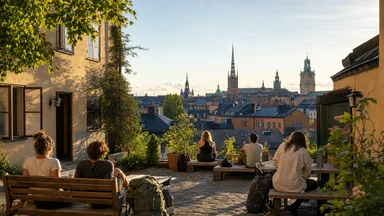
Stockholm in summer draws crowds for good reason: long daylight, mild weather, and a city built on islands. But the difference between a July trip and a late-August trip can be the difference between paying triple for a hostel bunk and paying a reasonable rate. This article looks at the numbers behind the seasonality, what the brochures leave out, and how a traveler can plan around the price spikes without sacrificing the sun.
July's Hostel Beds Hit Triple the August Rate
Booking data from hostel aggregator sites in 2025 showed dorm beds in central Stockholm ranging from roughly 350 to 600 SEK per night during June through August. But July stands out: peak-season demand can push those same beds to around 700 SEK or more, while September rates drop to about 200–350 SEK. That is roughly a threefold difference between July and September, and even a 40–60 percent drop from July to late August.
The reason is straightforward. July is when European school holidays and North American summer breaks coincide. Stockholm hosts multiple festivals, including the Stockholm Jazz Festival and the Stockholm Culture Festival, both in July. The city's hotel capacity fills up, and hostels are no exception. Hostelworld and Booking.com listings show that private rooms in hostels, which might cost 600–900 SEK in late August, can exceed 1,200 SEK in July.
What makes this frustrating is that the weather in late August is often just as good. Average highs in Stockholm in late August sit around 18–22°C, compared to 20–24°C in July. Rain risk is similar, and the sun still sets after 8 p.m. The main difference is the price. A traveler who shifts their trip by two weeks can save enough to cover a day trip to the archipelago.
Data from the Swedish Tourism Board suggests that accommodation prices in Stockholm are among the most seasonally volatile in Scandinavia. A 2024 report noted that hotel rates in July were roughly 80 percent above the annual average, while August rates were only about 20 percent above. Hostels follow a similar curve, though with less dramatic highs because they cater to a more price-sensitive crowd.
The Shoulder-Season Sweet Spot: Late August
Late August in Stockholm is a window when the city still feels like summer but the crowds have thinned. The weather holds at 15–22°C, and the days are long enough for full sightseeing days. Museums like the Vasa Museum and Skansen remain on extended summer hours until at least early September. The Djurgarden ferries run regularly, and the archipelago boats still operate daily.
Crowds are noticeably smaller after the first week of August. The midsummer rush is over, and many Swedish families have returned to work. Queues at the Vasa Museum, which can stretch 30 minutes in July, drop to near zero. Restaurants along Sodermalm's Gota gatan have tables available without booking. The atmosphere is relaxed.
Ferry discounts to the archipelago appear in late August. Some operators, like Waxholmsbolaget, offer off-peak fares for departures after a certain time, or multi-day passes that are cheaper than in July. A day trip to Vaxholm or Sandhamn might cost around 150–250 SEK round trip in late August versus 200–350 SEK in July. The difference is not huge, but it adds up for a family or a solo traveler on a budget.
Accommodation availability is also better. Hostel dorm beds in late August can be found for 250–400 SEK with a bit of searching. Private hostel rooms run 600–900 SEK. Budget hotels, which in July might cost 1,200–1,800 SEK, drop to 900–1,500 SEK. This is the sweet spot for the traveler who wants summer weather without the peak price.
What the Brochures Get Wrong About Summer
Stockholm's tourism marketing leans heavily on the midnight sun, but that is a phenomenon that barely touches the city. In Stockholm, the sun sets around 10 p.m. in June and rises around 3:30 a.m., but it never stays above the horizon all night. The real draw is the long twilight, but brochures often imply a 24-hour day. Travelers who expect midnight sun in Stockholm will be disappointed.
Rain risk is another point of mismatch. June in Stockholm can be colder and rainier than September. Average June rainfall is about 45 mm, and temperatures can dip to 12°C. September, by contrast, averages 40 mm of rain and temperatures of 14–18°C. The brochures tend to show sunny June scenes, but the statistical chance of a rainy day is similar across both months.
Queues are a third omission. The Vasa Museum, one of the most visited in Scandinavia, saw over 1.5 million visitors in 2024. July queues can exceed 45 minutes at peak hours. Brochures do not mention this. Similarly, the ABBA Museum and the Fotografiska gallery have timed-entry systems that sell out days in advance in July. The shoulder season avoids this.
Price surges are the biggest gap. Swedish tourism board materials rarely highlight the July premium. They mention that summer is high season, but the magnitude—three times a hostel bed—is not spelled out. For the budget-conscious traveler, this omission can cost hundreds of dollars.
Budget Breakdown: Hostel vs Hotel vs Couch
For a solo traveler, a hostel dorm bed is the cheapest paid option. In late August, prices range from 250 to 500 SEK per night. Hostels like Generator Stockholm or City Backpackers offer dorms with lockers and breakfast for around 350 SEK. In July, the same bed can cost 600–800 SEK. A private room in a hostel runs 600–900 SEK in shoulder season and 900–1,200 SEK in July.
Budget hotels, such as those in the Scandic or Clarion chains, start around 900 SEK in late August for a double room. In July, the same room can hit 1,500 SEK or more. Airbnb apartments in central Stockholm average 1,000–1,500 SEK per night in shoulder season, with a sharp July premium. Couchsurfing remains free but has limited availability; hosts are less likely to accept guests during peak tourist season.
For a couple, a private hostel room is often the best value. At 700 SEK per night, it beats a hotel at 1,200 SEK. For a family of four, an Airbnb with a kitchen can save on food costs. The trade-off is location: hostels tend to be in central areas, while budget Airbnbs may be in suburbs like Sundbyberg or Alvsjo, requiring transit passes.
Overall, a five-night stay in a hostel dorm in late August might cost 1,500–2,500 SEK. The same trip in July would run 3,000–4,000 SEK. That difference of roughly 1,500 SEK can cover a day trip to the archipelago, a nice dinner, or a museum pass.
Transit and Food Costs Shift Seasonally
Stockholm's public transit system, SL, offers a monthly pass for 930 SEK as of 2025. A single ticket costs 39 SEK if bought via app. In shoulder season, a 72-hour pass for 330 SEK is a good deal for tourists. In July, no surcharge applies, but the pass is still worth it. The real seasonal shift is on ferries: some archipelago routes add a small summer surcharge in July that drops in August.
Food costs follow a less dramatic curve. Street food markets like Hötorgshallen or Smaka offer meals for 80–120 SEK. A sit-down dinner at a mid-range restaurant in Sodermalm runs 200–350 SEK for a main course. In July, some restaurants add a seasonal menu with higher prices, but the difference is maybe 10–20 percent. The bigger saving is on self-catering: grocery stores like ICA or Coop have stable prices year-round.
Alcohol is expensive in Sweden, but that does not change with season. A beer at a bar costs 70–90 SEK. A glass of wine, 100–130 SEK. The only seasonal factor is that outdoor seating areas, like those on Skeppsholmen, are only open in summer. That is an experience worth paying for, but it does not affect the budget much.
The largest seasonal cost shift is accommodation, not transit or food. A traveler who saves on lodging can afford to eat out more or take an extra ferry trip. The rule of thumb: in late August, a daily budget of around 800 SEK (hostel dorm, transit, two meals, one attraction) is comfortable. In July, that same budget might only cover the hostel bed and breakfast.
Real-World Timings: A Stockholm Itinerary Test
Consider a five-night trip in late August. Fly into Arlanda, take the Arlanda Express (roughly 280 SEK) or the SL commuter train (39 SEK with a pass). Stay at a hostel dorm in Gamla Stan or Norrmalm for 350 SEK per night. Total accommodation: 1,750 SEK. Transit pass for five days: around 330 SEK for a 72-hour pass plus a few single tickets. Food: 500 SEK for groceries and street food, plus two sit-down dinners at 300 SEK each, total 1,100 SEK. Attractions: Vasa Museum (170 SEK), ABBA Museum (250 SEK), and a free walking tour. Total: roughly 3,600 SEK for the trip.
The same itinerary in July would cost more. Hostel dorm: 600 SEK per night, total 3,000 SEK. Transit: similar at 330 SEK. Food: same at 1,100 SEK. Attractions: same. Total: around 4,430 SEK. That is about 830 SEK more, or roughly 23 percent higher. The real difference is in accommodation, which nearly doubles.
For a private hostel room in late August, the same trip would cost about 5,000 SEK. In July, it would be 7,000 SEK. The 2,000 SEK saving in August could fund a day trip to the archipelago: ferry 200 SEK, lunch 150 SEK, and a museum on Vaxholm 100 SEK, total 450 SEK. The saving covers that and leaves money for a nice meal.
These estimates are based on 2025 prices and may shift. Exchange rates vary. But the relative difference between July and late August is likely to persist. The key is to book early for August, as the best hostel beds go fast. A traveler who waits until a week before may find only the July leftovers.
When to Book and How to Hedge Risk
For a late August trip, booking a hostel 4–6 weeks ahead is usually enough. The best dorms—those with fewer beds, better location, or included breakfast—go first. Free cancellation policies are worth paying a 10 percent premium for, because weather or plans can change. Hostels on Booking.com often offer free cancellation up to 24 hours before, while direct bookings may be stricter.
Weather risk is real. Even in late August, a week of rain is possible. Packing layers and a waterproof jacket is essential. A backup plan for indoor activities—museums, cafes, indoor markets—is wise. The Vasa Museum and the Fotografiska gallery are good rainy-day options. The Stockholm Public Library is free and architecturally impressive.
Data from the Swedish Meteorological and Hydrological Institute shows that late August has roughly a 30 percent chance of a rainy day. That is similar to July. The difference is that in July, a rainy day feels like a waste of a peak-price trip. In late August, the lower cost makes it easier to accept.
Finally, verify prices before booking. The figures in this article are based on 2025 data and may be stale after 2026. Exchange rates, inflation, and new hostel openings can shift the landscape. A quick check on Hostelworld or Booking.com will confirm current ranges. The principle—late August is cheaper and still sunny—is likely to hold, but the exact numbers will vary.
Trade-Offs: What You Give Up in Late August
Late August is not a perfect substitute for July. Travelers who come for specific events—like the Stockholm Jazz Festival, usually held in early July—will miss them. The Stockholm Culture Festival, also in July, features free concerts and street performances that draw large crowds. If a festival is the main reason for the trip, the peak price may be unavoidable.
Daylight hours shrink noticeably. By late August, sunset is around 8:30 p.m., compared to 10 p.m. in June. That means about 90 minutes less evening light for outdoor exploration. For photographers or those who value long evenings, the difference matters. The twilight is still long, but it is not the endless dusk of midsummer.
Some outdoor attractions close earlier. The Skansen open-air museum reduces its hours after mid-August, and some of its animal enclosures close at 5 p.m. instead of 6 p.m. Djurgarden's amusement park, Grona Lund, operates on a reduced schedule after mid-August, with fewer ride hours on weekdays. Check specific dates before planning.
Archipelago ferry frequency drops. In July, boats to popular islands like Sandhamn run every 1–2 hours. In late August, the schedule may be every 2–3 hours, with the last return ferry leaving earlier. A day trip still works, but the timing is less flexible. Travelers should check the current timetable on Waxholmsbolaget's website.
Hostel social atmosphere changes. July hostels are full of young backpackers, making it easy to meet people. In late August, the crowd shifts to older travelers and families, and the common rooms are quieter. For solo travelers seeking a party vibe, July might be worth the premium. For those who prefer calm, late August is better.
Beyond Hostels: Alternative Budget Accommodation
Not everyone wants a dorm bed. For travelers willing to trade comfort for savings, camping is an option. Stockholm has a few campgrounds within city limits, like Ostermalms Citycamping on Djurgarden, with tent pitches for around 150–250 SEK per night. Facilities include showers and kitchens. The trade-off is a 20-minute walk to the nearest metro station, and tents offer little security for valuables.
Another option is house-sitting. Websites like TrustedHousesitters connect travelers with homeowners who need someone to watch their apartment and pets. In late August, many Stockholm residents are still on holiday, so listings appear. The cost is an annual membership fee (roughly 1,000 SEK), but the stay is free. Availability is hit-or-miss, and the traveler must be comfortable with pet care.
University dormitories sometimes rent rooms during summer breaks. Stockholm University and KTH Royal Institute of Technology offer rooms through their housing offices, typically from June to August. Rates are around 300–500 SEK per night for a single room with shared kitchen and bathroom. Bookings open in spring and fill quickly. This option is less known but reliable.
For the adventurous, Couchsurfing remains a free option, but hosts are scarce in late August because many are traveling themselves. The platform's community has shrunk since its peak, and response rates are lower. A backup plan is essential. Still, for a traveler on a shoestring, it is worth sending requests to a dozen hosts a month in advance.
Sample Budget: Late August vs July for a Couple
For a couple sharing a private hostel room, the savings are larger. In late August, a private room at a hostel like City Backpackers or Generator Stockholm costs about 700 SEK per night. Over five nights, that is 3,500 SEK. In July, the same room costs around 1,100 SEK per night, or 5,500 SEK total. The saving is 2,000 SEK, enough for a three-course dinner at a nice restaurant on Sodermalm.
Add transit: a 72-hour pass for two people costs 660 SEK total in any season. Food: self-catering breakfast and lunch, plus one dinner out per day, runs about 1,500 SEK for the trip. Attractions: two museum entries at 170 SEK each and a free walking tour, total 340 SEK. The late August trip totals about 6,000 SEK for the couple. The July trip totals about 8,000 SEK. The 2,000 SEK difference is a 25 percent saving.
If the couple chooses a budget hotel instead, the gap widens. A double room at a Scandic hotel in late August costs about 900 SEK per night, or 4,500 SEK for five nights. In July, the same room is 1,500 SEK per night, or 7,500 SEK. The saving is 3,000 SEK. That could cover a day trip to the archipelago with a nice lunch, or a spa visit at a public bath like Centralbadet.
These numbers assume early booking. Last-minute rates in late August can be even lower, as hotels drop prices to fill rooms. In July, last-minute rates are almost always higher. The price floor is lower in August, and the ceiling is lower too.
Archipelago Day Trip: A Cost Comparison
A day trip to the Stockholm archipelago is a highlight of any summer visit. In late August, the experience is nearly identical to July, but cheaper. Take the ferry from Stromkajen to Vaxholm, a popular island town. A round-trip ticket in late August costs around 150–200 SEK per person, depending on the time of day. In July, the same ticket is 200–250 SEK. For a couple, that saves 100 SEK.
Lunch on Vaxholm: a meal at a mid-range cafe costs about 150 SEK per person in either month. A visit to the Vaxholm Fortress museum costs 100 SEK per person. Total for a couple in late August: ferry 350 SEK, lunch 300 SEK, museum 200 SEK = 850 SEK. In July: ferry 450 SEK, lunch 300 SEK, museum 200 SEK = 950 SEK. The saving is 100 SEK, modest but real.
For a longer trip to Sandhamn, the differences are similar. The ferry ride takes about 2.5 hours each way, and tickets in late August are around 200–250 SEK round trip, versus 250–300 SEK in July. The island has fewer crowds in late August, making it easier to find a quiet spot on the beach. The water temperature is still around 16–18°C, comfortable for a quick swim.
The main trade-off: in July, there are more ferry departures, so you can stay later. In late August, the last ferry back might leave at 5 p.m. instead of 7 p.m. That cuts the day short. Check the schedule before committing. For most travelers, the saving and the quieter experience outweigh the earlier return.
Should You Skip July Entirely?
For the budget traveler, the answer is clear: choose late August over July. The weather is similar, the crowds are smaller, and the prices are significantly lower. The only reasons to pick July are specific festivals, a desire for maximum daylight, or a social hostel scene. If none of those matter, late August is the better bet.
For travelers with flexibility, September is even cheaper. Hostel dorm beds drop to 200–350 SEK, and the weather remains mild through early September. The risk of rain increases slightly, but the savings are larger. The Vasa Museum and other attractions switch to winter hours by mid-September, so check opening times. September is the true budget sweet spot, but late August offers the best balance of cost and summer atmosphere.
For families, the trade-off is school schedules. Most children in Europe and North America return to school in late August or early September. A family trip in late August is possible only if school starts after Labor Day or the equivalent. For families with school-age kids, July may be the only option. In that case, book early, expect peak prices, and plan indoor activities for rainy days.
Ultimately, the decision hinges on priorities. This article provides the data to make an informed choice. The key is to know what you are paying for—and what you are not.
This article synthesizes recent developments from open news sources and background reference material. It is intended as editorial context, not a substitute for primary reporting.