Warsaw Milk Bar Sampler Plate Costs Less Than a Loaf of Bread
Warsaw's state-subsidized milk bars still serve full meals for under US$6. Where to find real ones, how to pay, what to order, and how locals judge freshness.
In Warsaw, a full lunch of pierogi, kompot, and a side salad can cost less than a decent loaf of bread. The city's state-subsidized milk bars — known locally as bar mleczny — have survived communism, capitalism, and now 2020s inflation. A sampler plate of three pierogi varieties, a cabbage salad, and a glass of kompot typically runs between US$3 and US$5. A loaf of decent rye bread in Warsaw now costs about US$2–3. The arithmetic is simple: you can eat a full, hot meal for roughly the same price as a bakery item. This article walks through where to find the real milk bars, how locals judge safety and freshness, payment realities, optimal time windows, and what to order on a 50-złoty budget.
A Loaf of Bread vs. a Full Meal: The Price Gap That Survived Inflation
Milk bars are remnants of Poland's communist-era public canteens, originally designed to provide affordable, nutritious meals to workers. The state subsidized them heavily, and that subsidy — though reduced — persists today. Even after the inflation spike of 2022–2023, a full meal at a milk bar rarely exceeds US$6–8. In 2026, the gap between milk bar prices and standard restaurant prices remains wide. A sit-down restaurant main course in Warsaw now costs US$12–18, roughly three times the price of a comparable milk bar plate.
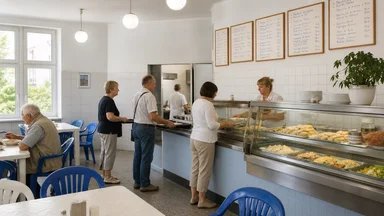
The price gap is not an accident. Milk bars are legally required to keep prices low in exchange for state support — rent breaks, tax exemptions, and direct subsidies on ingredients. This means the same pierogi that would cost US$10 in a tourist-area restaurant costs about US$2–3 in a milk bar. The trade-off is ambiance: plastic tables, fluorescent lighting, and a no-nonsense queue system. But for budget-conscious travelers, the value is unmatched.
As of mid-2026, the price of a loaf of bread in Warsaw hovers around US$2–3, depending on the bakery. A milk bar sampler plate — typically three pierogi, a cabbage or beet salad, and kompot — costs US$3–5. That means a full meal can be cheaper than a loaf of artisanal sourdough. Even adding a second plate of naleśniki (pancakes) for dessert keeps the total under US$6. For travelers watching their budget, this makes milk bars an essential part of any Warsaw visit.
Some critics argue that the quality has declined as subsidies have shrunk. But regulars counter that the turnover is so high — especially at lunch — that food is rarely sitting long. The key is knowing where to go and what to look for.
Where to Find the Real Milk Bars (Not Tourist Replicas)
Not every place calling itself a milk bar is the real thing. In tourist-heavy areas like Plac Zbawiciela, a few establishments have adopted the name and retro decor but charge restaurant prices. The real milk bars are scattered in residential neighborhoods and near universities. Three stand out for reliability as of late 2025 reports.
Bar Prasowy at Marszałkowska 10/16 is a workhorse. It opens early — roughly 7:00 AM — and serves breakfast through early dinner. As of 2024 opening-time checks, it reliably opens on schedule. The menu is in Polish only, but Google Lens works well. Expect queues at lunch, but they move fast. Payment is cash-only, though some recent reports suggest Blik (Polish mobile payment) may be accepted. Bring small denominations.
Bambino at ul. Hoża 19 is a classic. Cash-only as of late 2025 reports, with no card machine in sight. The decor hasn't changed since the 1970s. The pierogi are consistently good, and the kompot is always available. Locals recommend the pierogi ruskie (potato-cheese) and the leniwe (sweet cheese dumplings). The queue at lunch can be 15–20 minutes, but it's worth the wait.
Familijny at ul. Nowolipki 21 is deeper in the residential district. No English menu — use Google Lens or point. The soups are excellent, especially the żurek (sour rye soup). The seating is communal, and locals often share tables. Avoid the Plac Zbawiciela area milk bars; they cater to crowds and prices are higher. Look for handwritten price boards and plastic tables — those are reliable signs of an authentic milk bar.
Another lesser-known but reliable option is Bar Mleczny "Pod Barbakanem" near the Old Town. Despite its touristy location, it retains genuine pricing and a loyal local clientele. The interior is small and often crowded, but the pierogi ruskie and naleśniki are consistently good. It's open until 18:00 on weekdays, but closed on Sundays. A good backup if you're exploring the Old Town and need a quick, cheap meal.
For those willing to venture a bit further, Bar Mleczny "Północny" in the Żoliborz district is a hidden gem. It's a 15-minute tram ride from the city center, but the prices are even lower — a full plate of pierogi with salad and kompot can be under US$3. The clientele is almost entirely local, and the staff are friendly despite the language barrier. The tram stop is just a 2-minute walk away, making it accessible for those with a transport pass.
How Locals Judge Freshness and Safety Without a Word of Polish
Food safety in milk bars is generally good, but turnover is the best indicator. Locals watch the queue: if the line is fast and steady, the food is fresh. A slow queue with congealed-looking trays is a red flag. Check if cabbage salads are kept in refrigerated displays, not sitting out at room temperature for hours. In the summer, this matters more.
Another cue: pierogi edges should be sealed tight, with no cracks or dried dough. Cracked edges suggest they've been sitting under a heat lamp too long. Avoid soups that look thick or have a skin on top — that means they've been reheated multiple times. The żurek should be creamy, not separated.
Watch how the staff handles plates. If the same rag is used to wipe multiple tables and then plates, that's a hygiene concern. Most milk bars are clean, but a few in high-traffic areas cut corners. If the floor is sticky or the restroom is locked, consider moving on. Trust your instincts.
Some travelers worry about language barriers. In practice, pointing and smiling works. If you're unsure, look for a table of elderly locals eating with gusto — that's a strong endorsement. Many milk bars have been operating for decades, and their regulars are fiercely loyal.
Another practical tip: observe the turnover of specific dishes. If a tray of pierogi is emptied and replaced within 10 minutes, that's a good sign. If the same tray sits for 30 minutes, skip it. Similarly, watch how the staff replenishes soups — if they bring out a fresh pot from the kitchen, it's likely freshly made. If they just stir the existing pot, it's been sitting.
Payment Realities: Cash, Cards, and the Złoty Zone
The biggest practical hurdle for visitors is payment. Many milk bars remain cash-only in 2026. They deal exclusively in Polish złoty, and they prefer small denominations — 10, 20, and 50 złoty notes (roughly US$2.50, US$5, and US$12.50 as of mid-2026). Larger notes, like 100 or 200 złoty, may be refused if the bar has limited change.
ATMs near milk bars often charge a fee of 5–10 złoty (US$1.25–2.50) per withdrawal. Avoid standalone ATMs in tourist areas; use bank-affiliated machines inside malls or bank branches. Some newer milk bars have started accepting Blik, a Polish mobile payment app that works with most local bank accounts. For foreign visitors, Blik is rarely an option unless you have a Polish bank account. Visa and Mastercard are rarely accepted; American Express is effectively useless.
A 50-złoty budget (roughly US$12.50) is enough for a full meal plus dessert and a second kompot. Withdraw 100 złoty at a time to cover two meals and avoid multiple ATM fees. Keep a stash of 10-złoty coins for small purchases. The cash-only reality is not likely to change soon — the state subsidy system is tied to cash reporting for many smaller bars.
For those who prefer to use cards, a few milk bars in central Warsaw have started trialing card payments. For example, Bar Mleczny "Słonecznik" near the University of Warsaw library accepts Visa and Mastercard, but only for amounts over 20 złoty. This is still rare, so always have cash as backup. Check recent reviews on Google Maps for the latest payment info — the situation can change quickly.
Another option is to use a prepaid travel card that supports contactless payments in złoty, but again, acceptance is limited. The most reliable strategy is to visit a bank ATM (e.g., PKO BP or Pekao) inside a shopping mall, where fees are lower. Avoid Euronet ATMs, which charge higher fees and often offer poor exchange rates.
Time Windows: When to Go and When to Skip
Timing is everything at a milk bar. Lunch peak runs from 12:30 to 14:00, when queues are longest and seating is scarce. If you arrive at 13:00, expect a 15- to 20-minute wait. The trade-off: the food is freshest at this time, as batches are being turned over constantly. Breakfast, from 7:00 to 9:00, offers cold items and limited hot options — mostly scrambled eggs and bread. It's fine, but not the full milk bar experience.
Late afternoon, between 15:00 and 17:00, is the emptiest time, but selection is limited. Many hot dishes may be sold out, and staff may be cleaning. If you want the full menu, aim for 11:30 – just before the lunch rush. Weekends are tricky: some milk bars close by 16:00 or earlier. Sunday closures are common; always check Google Maps or ask your accommodation. A few bars are open on Sunday, but hours are often reduced.
Seasonal factors matter too. In summer, milk bars are less crowded as locals eat outdoors. In winter, they're packed. If you're on a tight schedule, call ahead or check recent reviews for opening hours. The data can be stale — a bar that was open until 19:00 in 2024 may close at 17:00 in 2026.
Another timing consideration: public holidays. On Polish national holidays, many milk bars close entirely. If you're visiting during Easter or Christmas, plan accordingly. Some bars in residential areas may remain open, but it's best to check in advance. Also, note that many milk bars close for a few weeks in summer for staff holidays — a pattern common in Polish institutions.
What to Order and What to Skip on a 50-Złoty Budget
With 50 złoty (about US$12.50), you can eat well. Start with pierogi ruskie (potato-cheese), typically 8–12 złoty for a portion of six. They're the safest choice — almost every milk bar makes them well. Add a side of surówka (cabbage salad) for about 3–5 złoty. A kompot (fruit drink) is always included in the meal price, usually 2–3 złoty extra. For dessert, naleśniki (pancakes) with sweet filling — often jam or sweet cheese — cost about 6–10 złoty. Total: roughly 20–30 złoty, leaving room for a second kompot or an extra side.
What to skip: 'sztuka mięsa' (boiled meat) is often dry and unappealing. 'Kotlety' (breaded cutlets) can be good, but avoid them if the oil looks dark or reused — a sign of old frying fat. The baked fish is usually a better bet; it's simple but fresh. Soups are generally excellent, especially żurek and barszcz (beet soup). If you see a soup that looks congealed under a heat lamp, skip it.
Some travelers make the mistake of ordering too much. Portions are generous, and a single pierogi plate plus salad and kompot is enough for a light lunch. If you're hungry, add a soup and skip the dessert. The milk bar experience is about simplicity, not abundance.
For those with dietary restrictions, milk bars can be tricky. Vegetarians have good options: pierogi ruskie, leniwe, and vegetable soups. Vegans may struggle, as many dishes use dairy or eggs. The staff generally cannot accommodate substitutions. If you have allergies, learn the Polish words for your allergen and point at the tray. Most milk bars display dishes in a glass case, so you can see what you're getting.
Another tip: if you see a dish you don't recognize, ask a local in line. Many regulars are happy to explain. For example, 'pyzy' are potato dumplings often filled with meat, while 'kluski śląskie' are Silesian dumplings served with gravy. Both are worth trying if available.
The Trade-Off: Why Some Travelers Skip Milk Bars
Despite the value, milk bars aren't for everyone. The no-frills environment can feel stark — plastic tables, fluorescent lights, and a cafeteria-style queue. Travelers seeking a romantic dinner or a quiet workspace will be disappointed. The language barrier can be intimidating, especially for solo travelers who don't use translation apps. And the cash-only policy is a genuine hassle for those used to tapping a card.
There's also the question of consistency. While the three bars mentioned earlier are reliable, others can be hit-or-miss. A milk bar that was excellent in 2024 may have changed management or cut costs, leading to lower quality. Always check recent reviews on Google Maps or TripAdvisor. A bar with a rating below 4.0 and recent complaints about stale food is best avoided.
On the other hand, the low prices mean you can afford to take a risk. Even a mediocre milk bar meal costs less than a fast-food combo. For the adventurous traveler, part of the fun is exploring different bars and discovering hidden gems. The trade-off is clear: you sacrifice comfort and convenience for unbeatable value and a taste of authentic Polish working-class culture.
Another counter-argument: some travelers find the queue system stressful. In busy milk bars, you may need to jostle for a seat or share a table with strangers. This can be off-putting for introverts or those with social anxiety. However, the communal atmosphere is also part of the charm — you might end up chatting with a local who recommends their favorite dish.
Finally, consider the nutritional aspect. Milk bar meals are often heavy on carbs and fats — pierogi, potato pancakes, and breaded cutlets. If you're watching your diet, you may need to balance your meals elsewhere. But for an occasional treat, the value is hard to beat.
Beyond the Sampler Plate: Exploring the Full Menu
While the sampler plate is a great introduction, milk bars offer a wider range of dishes worth trying. Breakfast items like jajecznica (scrambled eggs) with bread and butter are simple but satisfying. For lunch, consider placki ziemniaczane (potato pancakes) served with sour cream or goulash. They're crisp, golden, and filling — typically US$2–4.
Desserts beyond naleśniki include leniwe (sweet cheese dumplings) and kisiel (fruit jelly). Leniwe are light and slightly sweet, often served with melted butter and sugar. Kisiel is a translucent fruit dessert, similar to a thick compote. Both are under US$2.
Drinks: kompot is the standard, but you can also order herbata (tea) or kawa (coffee). Coffee is usually instant, but it's cheap — around US$1. For a cold drink, try maślanka (buttermilk), a tangy dairy drink that's surprisingly refreshing. It's an acquired taste, but locals swear by it.
If you're visiting with a group, consider ordering a few different dishes and sharing. Most milk bars don't mind, and it's a great way to sample more of the menu. Just remember to pay separately or have one person handle the bill, as splitting payments can be difficult with cash.
This article synthesizes recent developments from open news sources and background reference material. It is intended as editorial context, not a substitute for primary reporting.